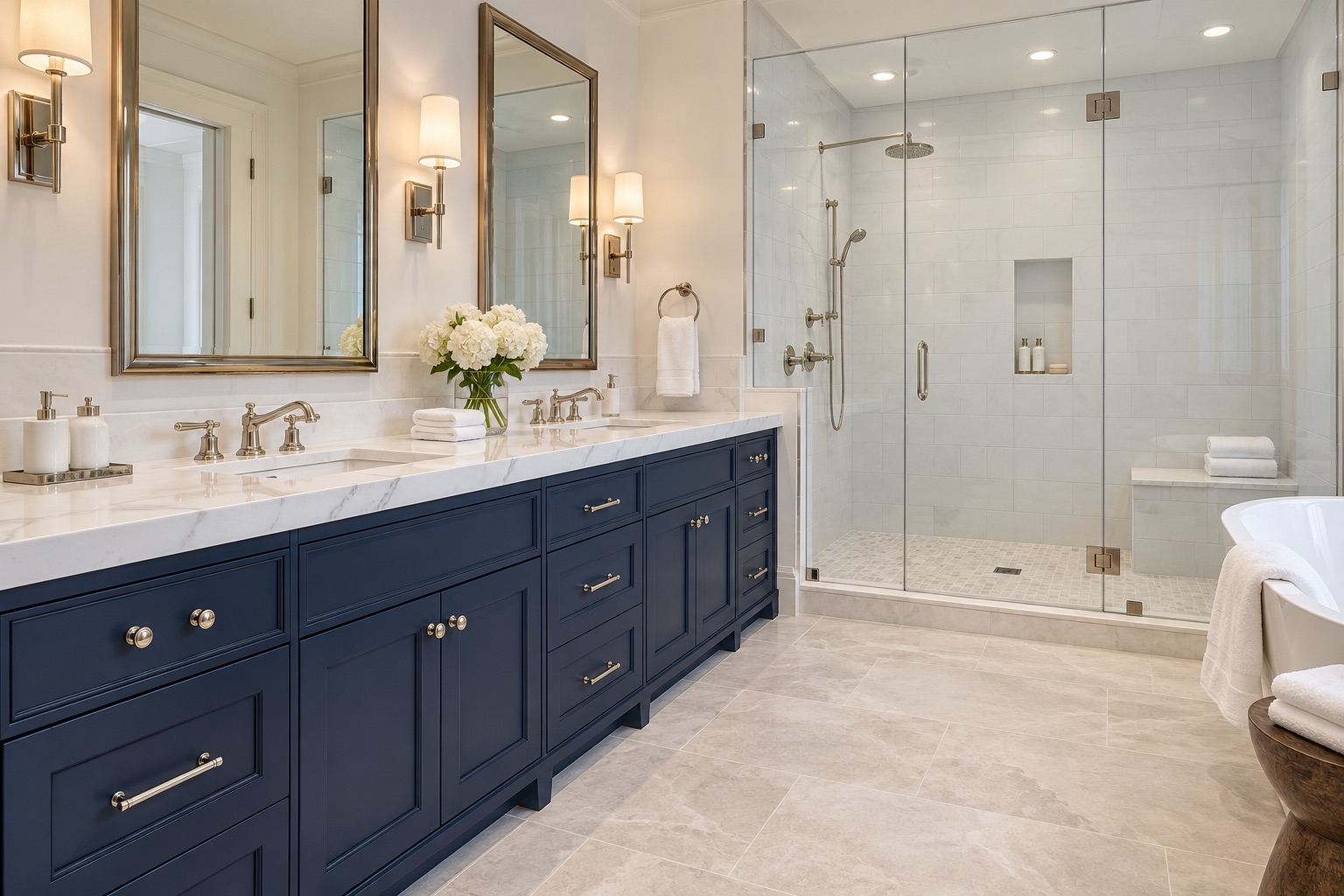
Describe the problem first
Write down what does not work in the current bathroom. It might be limited storage, difficult cleaning, an awkward door, a tub you do not use, or another practical issue. Decide which problems the remodel must solve before collecting finish options.
Choose what stays and what moves
Identify the fixtures and walls you would like to retain. Moving a toilet, shower, or vanity can introduce work beyond the visible finish change. Ask for those dependencies to be explained before comparing prices for two different layouts.
Decide how the room needs to function
List the people using the bathroom and the storage they need. Discuss preferred shower or tub use, access considerations, lighting, and where everyday items will go. A photograph with notes can make this conversation more useful than a tile sample alone.
Ask what sits behind the finishes
Ask who is responsible for the substrate, water-management system, ventilation, and coordination of affected trades. Request product and installation information where relevant. Attractive tile is only one part of the completed work; hidden work needs its own review.
Plan for the construction period
Identify which bathroom can remain in use, how the work area will be accessed, and where materials can be stored. Agree on how selections and unexpected conditions will be communicated. Confirm any permit requirements for the actual scope with the applicable authority.